Table of Contents
Got a Wrong or Excessive Electricity Bill? Here Is What You Can Do
Every month, thousands of consumers across Pakistan open their electricity bill and find a number that makes no sense: double the usual units, a meter reading that does not match the meter, or charges they have never seen before. The good news is that you have clear rights and a defined complaint process. The bad news is that most people either pay the wrong amount out of frustration or complain in a way that gets ignored.
This guide explains how to confirm that your bill is really wrong, how to collect evidence, where to complain, and how to escalate if your distribution company (LESCO, MEPCO, GEPCO, IESCO, FESCO and others) does not respond.
Step 1: Make Sure the Bill Is Actually Wrong
Before complaining, spend five minutes checking the basics. A complaint with a specific, verifiable error is taken far more seriously than "my bill is too high."
- Check the reference number. Confirm the name, address and reference number belong to you. You can view your bill using our bill checker.
- Compare readings. Look at your physical meter and compare it with the "current reading" on the bill.
- Recalculate units. Current reading minus previous reading should equal units consumed (multiplied by the multiplying factor if you have one).
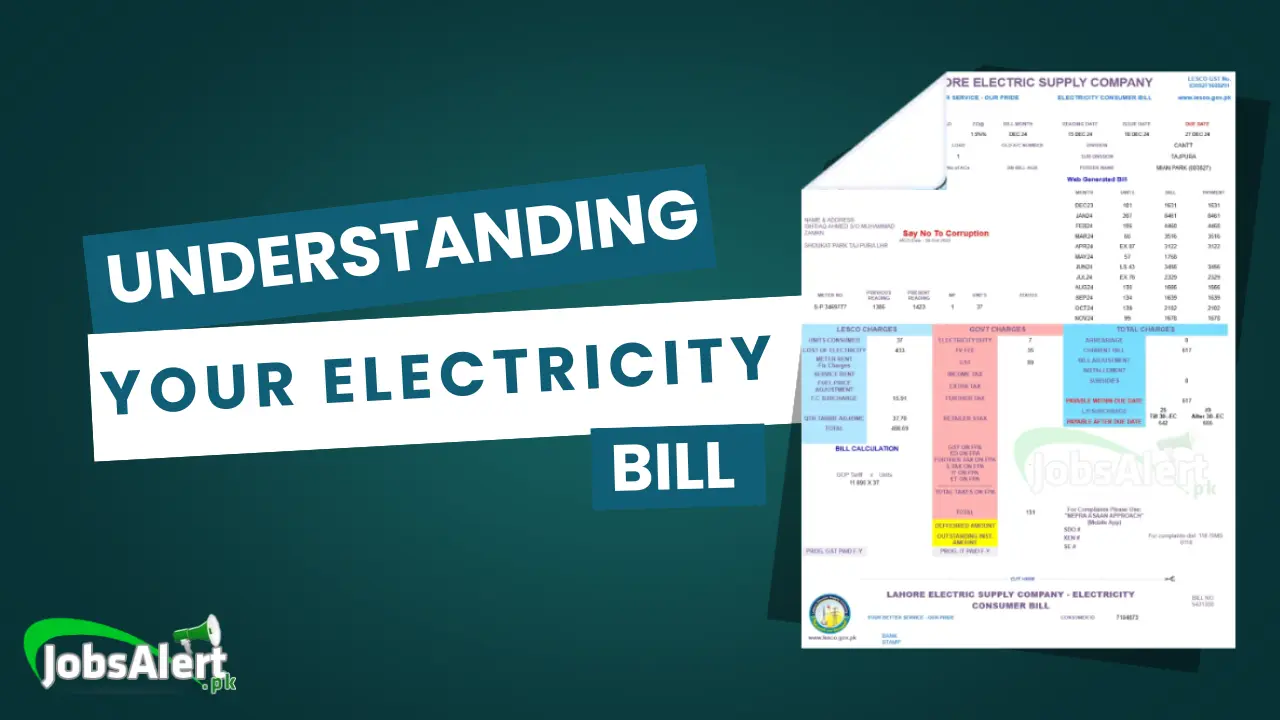
- Check the reading type. Codes like "E" (estimated) or "AV" (average) mean nobody read your meter. See our guide on Understanding Electricity Bill Components.
- Compare with previous months. A sudden jump may be seasonal (summer AC use), or it may be an error.
Free Bill Verification Calculator
Use this quick calculator to check whether the units on your bill match your meter. Enter the readings from your bill and the number of units charged. Nothing is stored or sent anywhere; the calculation happens in your browser.
Common Reasons for Wrong Bills
| Problem | What It Usually Means | What to Bring as Evidence |
|---|---|---|
| Reading higher than the meter | Meter reader recorded the wrong figure | Dated photo of your meter display |
| Estimated / average billing | Meter was not read, or was inaccessible | Last 6 bills, photo of meter |
| Bill for someone else's usage | Wrong reference number or shared meter | Copy of bill, CNIC, site details |
| Wrong tariff category | Domestic connection billed as commercial | Connection documents, bill copies |
| Defective meter | Meter running fast, stuck or damaged | Photos/video, written complaint copy |
| Unexpected arrears or surcharges | Payment not credited, or old balance carried forward | Payment receipts for previous bills |
Step 2: Collect Your Evidence
Good evidence makes the difference between a quick correction and months of back-and-forth.
- A clear, dated photo or short video of your meter showing the current reading
- A copy of the disputed bill and your previous 6 to 12 bills
- Receipts for all recent payments
- A list of appliances and how long you usually run them (useful if you suspect over-billing)
- A copy of your CNIC and, for rented property, your tenancy details
Step 3: File the Complaint with Your Distribution Company
Start at the lowest level. Most billing errors are corrected here, and escalation authorities usually expect that you tried this first.
Helpline
Most distribution companies run a customer helpline (the national WAPDA/DISCO helpline is commonly 118; check your bill for your company's own numbers). Always ask for a complaint number and note the date, time and name of the person you spoke to.
Sub-Divisional Office (SDO) or Customer Service Centre
Billing complaints are normally handled by the sub-division that serves your area. Visit the office, submit a short written application, and ask for a stamped or acknowledged copy. A written complaint with a receiving stamp is far more powerful than a phone call.
What to Write in Your Application
Sample application:
To the Sub-Divisional Officer, [Company Name], [Sub-Division]. Subject: Request for correction of bill for [Month/Year], Reference No. [14-digit number]. Respectfully, I received a bill of Rs. [amount] showing [units] units, whereas my meter reading is [actual reading] on [date]. My average consumption in the last six months was [average] units. I request you to inspect my meter and correct the bill. Attached are copies of the bill, previous bills, payment receipts and meter photographs. Name, CNIC, contact number, date.
Request a Meter Check
If you suspect the meter itself, specifically request an inspection and testing of the meter. Ask for the testing report in writing, and be present when the meter is checked if possible.
Step 4: What About Paying the Bill During the Dispute?
This is where many consumers make mistakes. Ignoring the bill completely can lead to late payment surcharges and, eventually, disconnection. In general:
- Ask the SDO office in writing whether you may pay an undisputed or average amount while the complaint is processed.
- Keep every receipt, and write "paid under protest" on your application if you pay the full amount to avoid disconnection.
- Do not stop paying altogether unless the company has formally put the disputed amount on hold.
Step 5: Escalate If Nothing Happens
If your complaint is not resolved in a reasonable time, move up the chain, keeping copies of everything you have already submitted:
- Higher offices of your distribution company: The Executive Engineer (XEN) / Operation Division, then the Superintending Engineer (SE) and Customer Services office or complaint cell at the circle/company level.
- NEPRA: The National Electric Power Regulatory Authority accepts consumer complaints about distribution companies. Visit the NEPRA website for the current complaint procedure.
- Provincial Electric Inspector / Inspectorate: Handles disputes involving metering accuracy and certain consumer complaints.
- Federal Ombudsman (Wafaqi Mohtasib): Accepts complaints about maladministration by federal agencies, including power distribution companies.
- Pakistan Citizen Portal: Government complaint platform, useful when your local office is unresponsive.
A Special Case: Detection Bills
Sometimes a company issues a "detection bill" alleging meter tampering or excess load. These can be very large and carry serious consequences. If you receive one, do not panic and do not ignore it. Request the inspection report in writing, ask for the basis of the calculation, and consult a lawyer or approach NEPRA or the relevant authority promptly, since deadlines to challenge may apply.
How to Avoid Wrong Bills in the Future
- Check your bill online every month as soon as it is generated
- Photograph your meter on the reading date
- Make sure meter access is not blocked on reading day
- Keep payment receipts for at least 12 months
- Learn how your tariff works so you can spot irregularities, as explained in our bill components guide
- Reduce real consumption with the tips in 10 Effective Ways to Reduce Your Electricity Bill
Conclusion
A wrong electricity bill is frustrating, but it is usually fixable if you act methodically: verify the error, gather evidence, complain in writing, and escalate when needed. Stay calm, keep records, and always get acknowledgement of your complaint. For payment options while your complaint is pending, see our guide on Electricity Bill Payment Methods in Pakistan.


Comments
Comments are currently disabled for this article.